
Home › Forums › Time Space Knowledge › MIND THE GAP
- This topic has 0 replies, 1 voice, and was last updated 06/20/2026 at 1:30 PM by David Filippone.
-
AuthorPosts
-
-
June 20, 2026 at 1:30 pm #1264
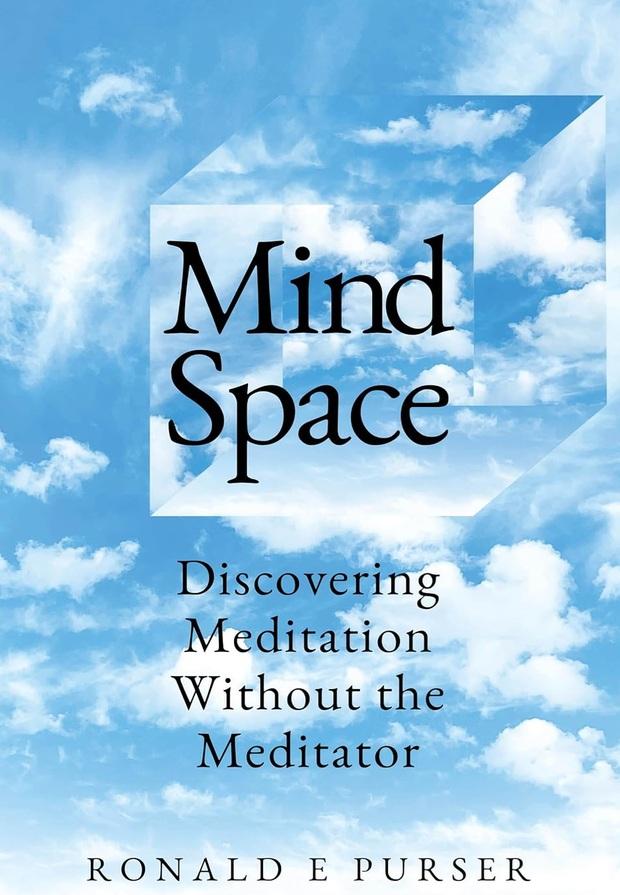
MIND THE GAP
This is a lovely passage from the middle of chapter 9 of the book, ‘Mind Space,’ by Ron Purser. You can actually taste Time’s Giving Instant. When we… Time, Space, Knowledge students… practice ‘edge of the future‘ exercises, like sitting with the immediacy of ‘Time’s Giving Instant’. If we could ‘let go’ and ‘relax’, under the movement of leaves for instance, unlabeled mental arisings are available for ‘noticing’. Like drifting clouds passing unnamed, ‘prior to grammar’ [prior to naming, labeling, or minding our stories]… there is just movement, or the rhythm of arisings. As children, we used to do this. We adults often discount this simple experience as unimportant or childish. It’s not! It’s actually revelatory if we would just notice. Here’s the quoted passage [emphasis added]…
“When we begin to appreciate this [space], the quality of our mental atmosphere dramatically shifts. The compulsion to chase every thought, to be at the mercy of its meaning, relaxes. The pause becomes less threatening and more inviting. We may even begin to notice that the so-called gaps are not rare anomalies but constant companions, surrounding each thought “immediately round about.” With practice, we can sense that the space between thoughts is always available, even if it is usually obscured. If the space between thoughts is not a void but a vivid open-ness, then what does this say bout the nature of thoughts themselves? They, too, may be less solid than they appear. Like music notes, they arise and fade, but they do not establish a continuous stream. Because they are not propelled forward by a hidden source, thoughts too emerge within openness and dissolve back into it. The “no source” claim is not a negation but a radical discovery: the origin we were seeking is already here, everywhere, in the very openness of Mind Space.
Seen this way, the space between thoughts is not just an interval. It is an always available, open invitation. We can rely less on the machinations of explanation and more towards immediate, direct experience. By minding the gaps, we do not need to follow every thought to its imagined origin, nor to await some final thought that will deliver certainty. The gaps show us that freedom is not elsewhere, waiting at the end of a chain of causes; it is here, in the lucidity that opens whenever thought falls silent.
We are now invited to turn the inquiry even further inside out. Instead of seeing space as a gap between the “real events” of thought, can we begin to see thoughts themselves as expressions of space?”
-
-
AuthorPosts

- You must be logged in to reply to this topic.